
Secure Your Spot in Regen Ag Online
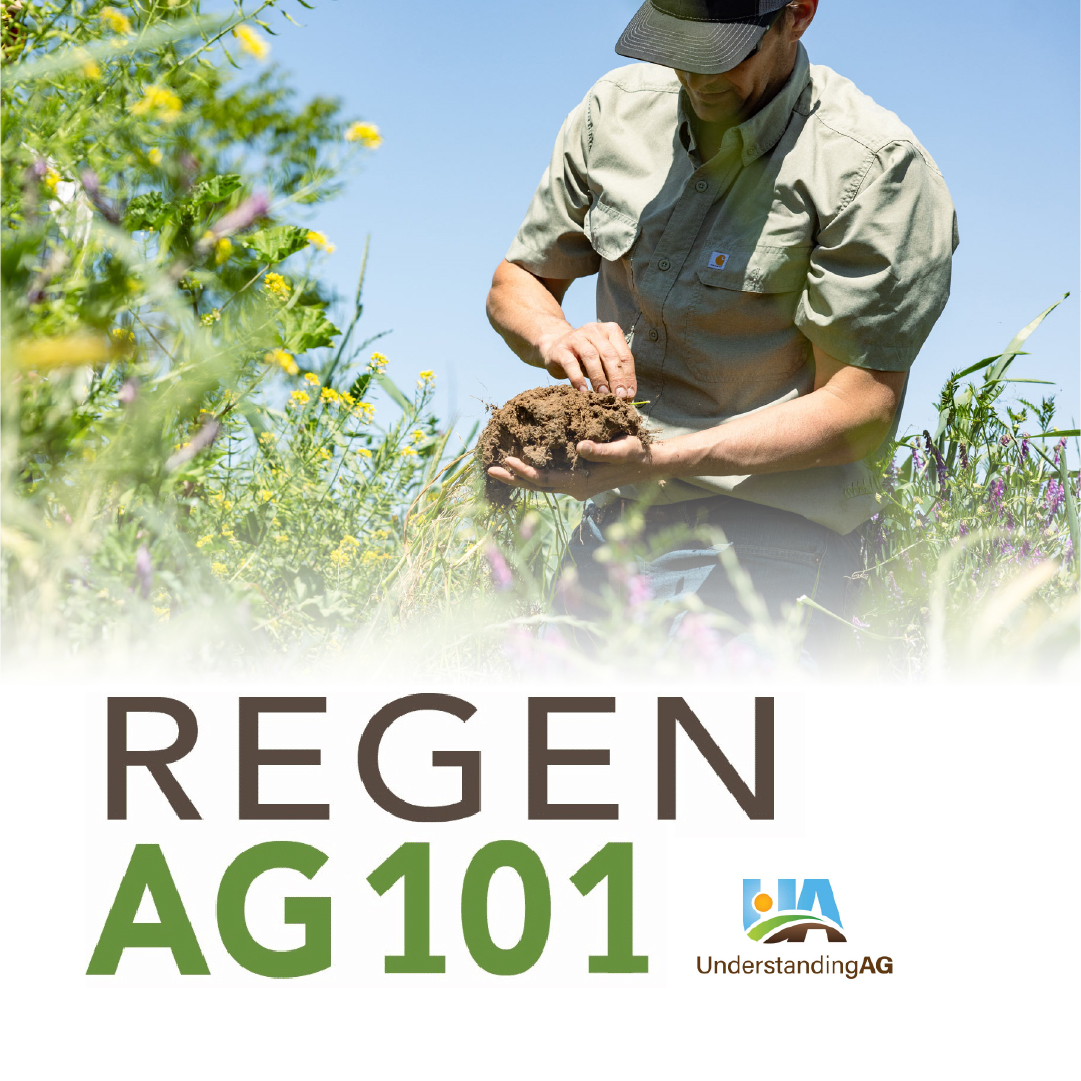
You’re about to gain access to one of the most practical introductions to regenerative agriculture available today.
Regen Ag 101 brings together the foundational teachings of leading regenerative agriculture educators, including Gabe Brown, Ray Archuleta, Allen Williams, and Shane New. In this course, you’ll learn the principles that help farmers and land managers build healthier soil, stronger ecosystems, and more resilient operations.
Whether you’re just starting your regenerative journey or looking to strengthen your understanding of soil health and ecosystem management, this course gives you a clear framework you can apply immediately.
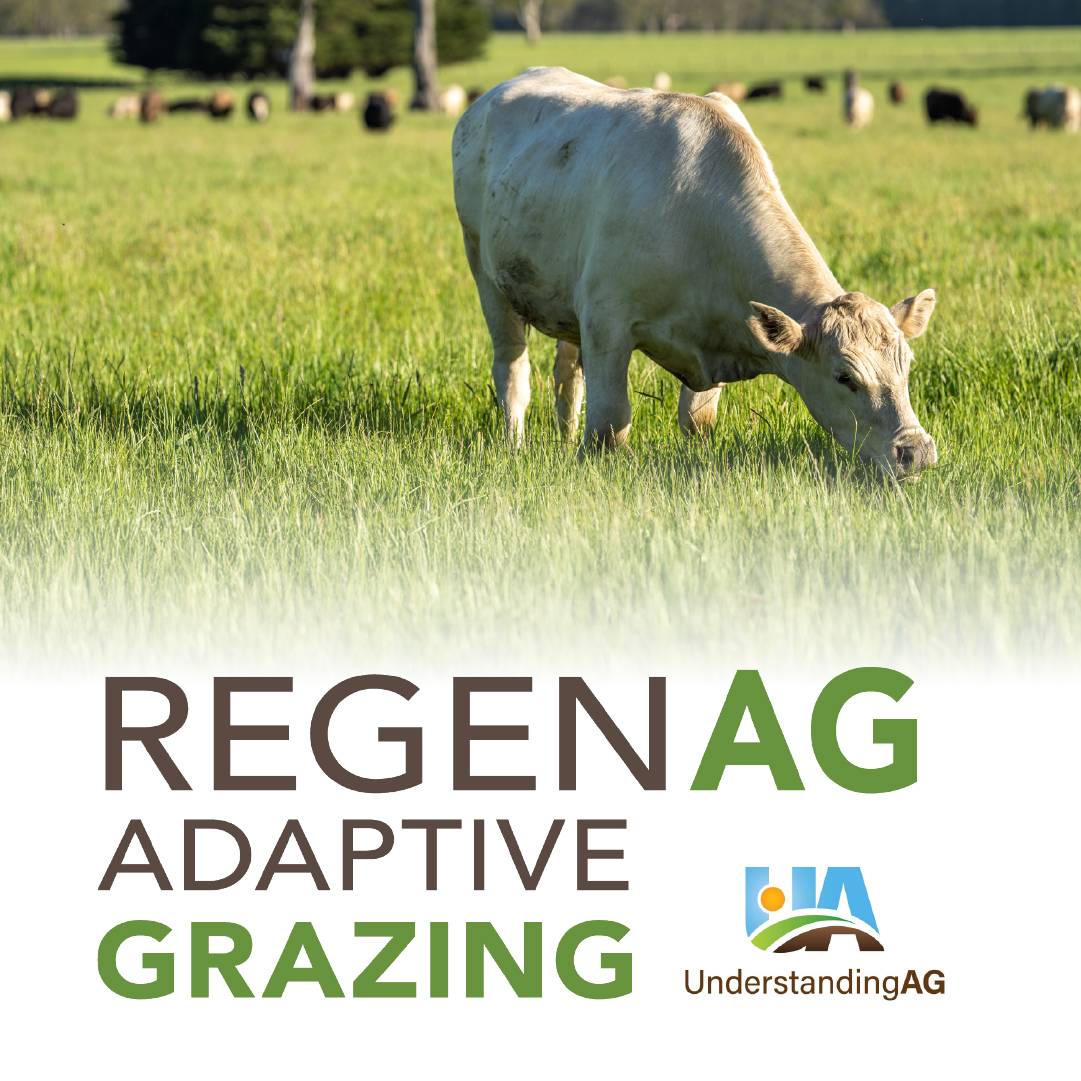
Adaptive Grazing: Integrating Livestock with the Land
Learn how to use livestock as a powerful tool to regenerate soil, increase forage production, and improve farm profitability. In this course, leading regenerative agriculture educators including Gabe Brown, Allen Williams, and Shane New walk through the principles and real-world practices behind adaptive grazing.
You’ll learn how to design grazing plans, calculate forage availability, manage stock density, and use observation to make better management decisions that improve ecosystem function and resilience.
Why Regen Ag 101?
Regen Ag 101 is designed to help you understand the “why” behind regenerative agriculture before jumping into the “how.” This course introduces the foundational ideas that drive resilient farms and ranches: healthy soil, functioning water cycles, biological diversity, living roots, animal integration, and adaptive stewardship. Rather than viewing the farm as a system that must be forced with inputs, this course helps students see agriculture as a living ecosystem that can be restored, managed, and improved over time.
Through instruction from leaders such as Gabe Brown, Ray Archuleta, Allen Williams, and Shane New, students learn how degraded soil, poor water infiltration, limited biodiversity, and input-heavy management affect farm profitability, community health, and food quality. The course offers a new lens for understanding agriculture: one that emphasizes observation, stewardship, and working in harmony with natural processes.
What You’ll Learn
In Regen Ag 101, you’ll build a practical understanding of the biological and ecological processes that make regenerative agriculture work. You’ll explore how photosynthesis, the water cycle, nutrient cycling, and the community of diverse life interact to drive soil function and productivity. You’ll also learn the six principles of a healthy ecosystem and how to apply them in the real world through management decisions around cover crops, grazing, plant diversity, and disturbance.
This course is ideal for farmers, ranchers, gardeners, land managers, and agricultural professionals who want a clear introduction to regenerative thinking. Whether you are just beginning or looking to strengthen your foundation, Regen Ag 101 will help you better observe your land, identify resource concerns, and make decisions that improve soil health, ecosystem resilience, and long-term profitability.
COURSE BREAKDOWN
Module 1: Why Regenerative Agriculture?
This opening module sets the stage for the course by explaining why regenerative agriculture matters. Gabe Brown, Ray Archuleta, Allen Williams, and Shane New introduce the economic, ecological, and human health challenges facing modern agriculture and explain why rebuilding soil function is central to restoring farms, ranches, and rural communities. Students are introduced to the big-picture promise of regenerative agriculture as a path toward healthier ecosystems, more resilient landscapes, and more profitable operations.
Module 2: Soil Health Demonstrations
This module uses Ray Archuleta’s well-known soil demonstrations to show how soil structure, aggregation, infiltration, and biology respond to management. Students see the dramatic differences between conventional, overgrazed, and biologically active soils, and learn why tillage, bare ground, and poor grazing management reduce water infiltration and damage soil function. The module makes soil health visible and practical by showing how management choices directly affect ecosystem performance.
Module 3: The Six Principles of a Healthy Ecosystem
In this module, Gabe Brown explains the six principles that underpin regenerative agriculture: context, least disturbance, armor on the soil, diversity, living roots, and animal integration. Students learn why these principles apply across farms, ranches, gardens, and landscapes of all sizes, and how they serve as a framework for improving soil health and ecosystem resilience. This module gives learners a simple but powerful lens for evaluating management decisions.
Module 4: Four Ecosystem Processes
Ray Archuleta walks students through the four critical ecosystem processes: photosynthesis, the water cycle, the nutrient cycle, and the community of diverse life. This module shows how these processes function together and why healthy agriculture depends on supporting all four at once. Students gain a deeper understanding of how living plants, aggregation, biology, and water infiltration work together to create functioning soil and productive land.
Module 5: Biology and How It Affects Your Farm
This module focuses on the living biology beneath our feet. Shane New explains how fungi, bacteria, roots, and other organisms interact to build soil aggregates, cycle nutrients, and improve water infiltration. Students learn how root exudates feed soil biology, why diversity matters, and how management decisions like overgrazing or bare soil can interrupt biological function. It is a practical introduction to the power of microbiology in regenerative systems.
Module 6: Identifying and Addressing Resource Concerns
Gabe Brown shows students how to observe their land and identify the true resource concerns affecting productivity and resilience. Instead of defaulting to purchased inputs, this module teaches learners to assess what their land is telling them through plant diversity, soil cover, biological activity, and nutrient cycling. Students also learn how to think more strategically about cover crop design, observation, and management decisions that work with nature rather than against it.
Module 7: The Three Rules of Adaptive Stewardship
This module introduces Allen Williams’ framework for adaptive stewardship and emphasizes the importance of historical ecological perspective. Students begin to understand that successful regenerative management requires more than copying practices; it requires seeing the land in context and stewarding it toward fuller function over time. The module challenges learners to think like observers and restorers of ecosystems rather than simple input managers.
Module 8: Adaptive Grazing
This module explores the role of livestock in regenerative systems and explains how properly managed grazing can stimulate plant recovery, improve nutrient cycling, and strengthen ecosystem health. Students learn that grazing is not just about forage utilization, but about timing, recovery, animal impact, and the relationship between plants, soil biology, and livestock. The focus is on using animals as a tool to regenerate land rather than degrade it.
Module 9: Nutrient Management
In this module, students learn to rethink fertility through the lens of biological function and nutrient cycling. Rather than relying only on purchased fertility, the course emphasizes how healthy soil systems cycle nutrients through living plants, biology, residues, and animal impact. Students gain a better understanding of how management affects nutrient availability, stability, and long-term soil function.
Module 10: Regen in Action
The final module brings the course concepts together by showing regenerative agriculture in practice. Students see how the principles and processes taught throughout the course are applied in real-world settings and how regenerative management becomes a way of observing, adapting, and stewarding the land over time. It serves as a practical conclusion and reinforces the idea that regenerative agriculture is not a single practice, but a way of managing whole systems.
Understanding Soil Biology
How living soil organisms help unlock nutrients bound in the mineral matrix and why biological nutrient release is a foundational strategy for resilient fertility.
Improving Nutrient Availability
Practical ways to leverage microbial activity to make existing nutrients more accessible to crops an approaches that can help reduce dependency on synthetic fertilizers.
Building Resilience and Profitability
Techniques that help maintain yields and crop health amid rising input costs and market uncertainty as well as strategies to strengthen plant performance.

About UA
Understanding Ag is a regenerative agriculture consulting and education company focused on helping producers improve soil health, ecosystem function, and farm profitability. Known for its leadership in adaptive grazing and regenerative management, the company equips farmers and ranchers with practical tools and principles for long-term success.

About Acres U.S.A.®
Acres U.S.A.® is North America's oldest publisher (est. 1971) on production-scale organic and sustainable farming. For more than 50 years, our mission has been to help farmers, ranchers and market gardeners grow food profitably, sustainably, without harmful chemicals.

© Copyright 2026, Acres U.S.A.® Acres U.S.A.® is a registered trademark of Acres U.S.A.®, LLC. Reproduction of material in this issue in any form without permission of the publisher is prohibited. No permission required for photocopies made for personal use. Requests for permission to reprint must be in writing to PO Box 351, Viroqua, WI 54665; email [email protected].
© 2026 Acres U.S.A.® LLC - All Rights Reserved
Acres U.S.A. is North America’s oldest publisher on production-scale organic and regenerative farming. For more than 50 years, our mission has been to help farmers, ranchers and market gardeners grow food profitably, regeneratively, and with nature in mind.
support@acresusa.com
970-392-4464